Loading...

This is default featured post 1 title

Go to Blogger edit html and find these sentences.Now replace these sentences with your own descriptions.This theme is Bloggerized by Lasantha Bandara - Premiumbloggertemplates.com.

This is default featured post 2 title

Go to Blogger edit html and find these sentences.Now replace these sentences with your own descriptions.This theme is Bloggerized by Lasantha Bandara - Premiumbloggertemplates.com.

This is default featured post 3 title

Go to Blogger edit html and find these sentences.Now replace these sentences with your own descriptions.This theme is Bloggerized by Lasantha Bandara - Premiumbloggertemplates.com.

This is default featured post 4 title

Go to Blogger edit html and find these sentences.Now replace these sentences with your own descriptions.This theme is Bloggerized by Lasantha Bandara - Premiumbloggertemplates.com.

This is default featured post 5 title

Go to Blogger edit html and find these sentences.Now replace these sentences with your own descriptions.This theme is Bloggerized by Lasantha Bandara - Premiumbloggertemplates.com.

Showing posts with label children. Show all posts

Tuesday, December 18, 2012

It's okay when WE kill their children (video)

Pfc. Sandoval, Ashley Wells, Wisdom Quarterly, mirrored from LedaOhio5 and Helias314
WARNING: Graphic footage!
 
Obama: more of the same (BIT)
This is how we are spreading our influence in the name of spreading peace, progress, and democracy. Is this what the MIC, Obama, and NATO have in store for the world?

At one point the Arab news person is heard saying, "Those who kill their own people have lost all credibility" a reference to those involved in 9/11, which is known throughout the Arab world to have been an inside job.

When you make war, you have to kill some kids
How can anyone stand by while drones and jets bomb innocents killing 50 collaterals to every intended target? If all we can do is stand by then we cannot hypocritically cry so loudly when one of our own kills our own children!
Shell of a naga monster deteriorating fast
Bush-era policies, continued and expanded by Obama, have led to the murder of over 1 million Iraqi children and civilians. It was a US war crime to target their water purification facilities. These victims of our military-industrial complex (MIC) aggression are no threat to us. But we are to them. We are to them.
 
How inhuman we must seem the longer we dehumanize them. They live, feel, die, love, work, take care of their children just as we do. Yet our government, for and by the people, has been taken over by war mongers and passive profiteers.

How many of us protested when Bush invaded in spite of the will of the American public? How many more of us did nothing, or even attached patriotic flags to our cars and homes in support of military aggression?

Now a newer better storyteller sits in the White House making excuses for the powers that be, a man who took his Nobel Peace Prize and started eight new wars with it. And what are we doing? Mourning a minor incident of military-grade killing, what our soldiers do on an average morning abroad, calling it the worst catastrophe ever.


Senator Daniel Inouye (Hawaii) outs the secret Shadow Government

Monday, December 17, 2012

The death of dear children (sutra)

Wisdom Quarterly translation of Visakha Sutra, Inspired Utterances (Udana 8.8)
The Buddha fearless mudra (Saksit_s/flickr.com)
This have I heard. On one occasion the Buddha was staying near Sāvatthī at the Eastern Monastery, in the palace of Migāra's mother. 

A dear and beloved grandson of Visākhā, Migāra's mother, had died. So Visākhā went to visit the Buddha with hair and clothes wet [marks of mourning].

Grief stricken she went in the middle of the day, bowed, and sat down. The Buddha said to Migāra's mother:

"Visākhā, why have you come here with wet hair and clothes in the middle of the day?"
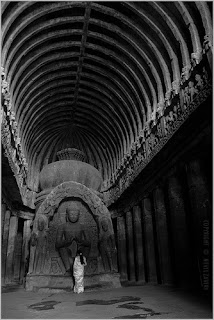
Going to the Buddha (Nevil Zaveri/flickr)
"My dear and beloved grandson has died," she explained.
 
"Visākhā, would you like to many children?"
 
"Yes, venerable sir, I would like to have as many children and grandchildren as there are people in [the city of] Sāvatthī."
 
"But how many people in Sāvatthī die in the course of a day?"
 
"Sometimes ten people die in Sāvatthī in the course of a day, sometimes nine... eight... seven... six... five... four... three... two... Sometimes just one person dies in Sāvatthī in the course of a day. Sāvatthī is never without people dying."
 
"Then, Visākhā, what do you think: Would you ever be free of wet clothes and hair?"

"No, venerable sir. Enough of my having so many children!"
 
"Visākhā, those who have 100 dear ones have 100 sufferings. Those who have 90 dear ones have 90 sufferings. Those who have 80... 70... 60... 50... 40... 30...20 ... ten... nine... eight... seven... six... five... four... three... two... Those who have one dear one have one suffering.

"Those who have no dear ones have no sufferings. They are free from sorrow, free from stain, free from lamentation, I tell you."
 
Blissful and blameless (health.com)
Realizing the significance, the Buddha exclaimed: "The sorrow, weeping, and many similar kinds of suffering exist in the world, exist dependent on something dear. They do not exist when there is nothing dear.

"Blissful and sorrowless are those for whom nothing in the world is anywhere perceived as dear. Therefore, one who aspires to attain the stainless and sorrowless (nirvana) should not seek to make anything anywhere in the world dear.
Cold world? No, the warmest!
Wisdom Quarterly (COMMENTARY)
The Buddha, like all arhats, reclines into final bliss of nirvana (Saksit_s/flickr)
 
But how could anyone avoid becoming attached to dear things in the world? In fact, on reflection, nothing is dear except that we make it so.
 
The proof? Something is called "dear" only because it is dear to someone, not because of anything it intrinsically possesses. IF this were not so, THEN there would be no release from attachment to the dear.  No one would be freed from grasping and clinging or what we refer to as "attachment."

Of course, for most people this is not the problem. The problem the idea that anyone would recommend that we not be attached to things so dear as children, as relatives, as friends.
 
Most people, most of the time, ARE going to be attached. And rightly so. The Buddha promoted and persuaded multitudes to care for one another, to cultivate loving-kindness (metta, love, friendliness, warmth for others) and compassion (karuna, actively helping relieve the suffering of others).
 
But he went further. He taught that to be happy, one should also cultivate joyful-appreciation (mudita) and after all three of these are developed, equanimity (upekkha).
 
This is where people stop understanding. Equanimity is misinterpreted as "indifference." But it really means non-bias. That is, those three beautiful karmic impulses are sent to ALL without distinction. This is how the practice is brought to fulfillment, perfection, fruition. The goal is more than social. But it is social.

"Enlightened" society? Progressive but not enlightened.
The world will not be enlightened, societies will not be, not cities, towns, or villages. Individuals, pairs, small groups of practitioners see the light (nimitta), develop the eight attainments (absorptions), make their way skyward to the deva-worlds, or go beyond ALL suffering to the supreme goal of nirvana.
 
With us, with our attachments, we FEAR nirvana as cold "nothingness," as annihilation, as "emptiness," as oblivion. And we do not see it, we do not strive for it, we turn away toward the world and pat ourselves on the back for choosing the eternal bodhisattva path. The work of a "savior-martyr" is never done, for there are too many beings to save for it to ever be done. 
 
That is why the historical Buddha never spoke of anyone abandoning the goal in favor of becoming another Maitreya (Messiah). It is one sure way not to cultivate the path, not to develop the necessary factors to make the best use of a human life, which is to directly know-and-see the truth. Then one could really be useful, could raise a hand in fearless-mudra and allay the suffering of others.

What about FULL gun control? (audio)

Blase Bonpane, World Focus, Dec. 16, 2012 10:00 am; WBUR.com; Wisdom Quarterly
Jillian Soto trying to get information on her sister, Victoria Soto, a teacher at the Sandy Hook elementary in Newtown, CT, Friday, after a gunman murdered children and adults. Her sister was among those killed (Jessica Hill/AP).

Who kills more children than anyone? What will we do now? Shall we follow Diane Feinstein and ban assault rifles so that the only people who have assault rifles are NRA members with enough foresight to have pre-purchased them? Shall we give the guns to soldiers and the paramilitary police then beg them not to shoot at us in the street the way they do "suspects" at protests and in ghettos now? What do we offer instead, more psychological care, more assessments, more surveillance? When the POLICE STATE arrives, will it be forced on us, or will we have been duped into demanding it? "Give me liberty or give me death." But don't hurt the children (of this country), anything but that! It's our Achilles heel. And we surrender unequivocally if you threaten them.
 
Imagine Romney trying to comfort a nation (UPI)

Tuesday, August 14, 2012

Children tortured in underground Islamic cult


Muslim "catacomb sect" faces cruelty charges
A sect member stands at the gate of their house near Kazan, Russia, 8 August Four members of a breakaway Russian Muslim sect in Russia's Tatarstan region have been charged with cruelty against children for allegedly keeping them underground.
  
Police discovered 27 children and 38 adults living in catacomb-like cells in  an eight-level underground bunker.
  
The sect's elderly leader, Faizrakhman Sattarov, had reportedly wanted to  build his own Islamic caliphate beneath the ground.
   
Prosecutors said some of the children had lived there for more than a  decade. The sect was uncovered last week in a suburb of the city of Kazan during an  investigation into recent attacks on Muslim clerics in Tatarstan, a mainly Muslim region on the River Volga. 
  
Mr. Sattarov, who had declared himself a Muslim prophet, has been charged with  the crime of "arbitrariness," a broad crime that covers "actions contrary to the  order presented by a law." No immediate reaction to the charges was reported.
   
"Divine light"
Nineteen underage children were removed by the Russian authorities, some of  them placed in care, others in [the] hospital, Russian government-owned newspaper Rossiyskaya Gazeta reports. More

Thursday, June 14, 2012

Monks walk away from sex-abuse cases

Text: Megan Twohey (Chicago Tribune, July 24, 2011); Wisdom Quarterly
Across the U.S., temples frustrate investigators by insisting they have no control over monks' actions or whereabouts. The scourge is not limited to Catholic priests and nuns.
 
The meeting took place at Wat Dhammaram, a cavernous [Thai] Theravada Buddhist temple on the southwest edge of Chicago.
  
A tearful 12-year-old told three monks how another monk had turned off the lights during a tutoring session, lifted her shirt and kissed and fondled her breasts while pressing against her, according to a lawsuit.
Editor: Prof. Cabezon, UCSB
Shortly after that meeting, one of the monks sent a letter to the girl's family, saying the temple's monastic community had resolved the matter, the lawsuit says.
   
The "wrong doer had accepted what he had done," wrote P. Boonshoo Sriburin, and within days would "leave the temple permanently" by flying back to Thailand. "We have done our best to restore the order," the letter said.
   
But 11 years later, the monk, Camnong Boa-Ubol, serves at a temple in California, where he says he interacts with children even as he faces a second claim, supported by DNA, that he impregnated a girl in the Chicago area.
   
Monastics are often beset by defilements.
Sriburin acknowledges that restoring order did not involve stopping Boa-Ubol from making the move to California. And it did not involve issuing a warning to the temple there. Wat Dhammaram didn't even tell its own board of directors what happened with the monk, he said.

"We have no authority to do anything. … He has his own choice to live anywhere," Sriburin said.
   
A Tribune review of sexual abuse cases involving several Theravada Buddhist temples found minimal accountability and lax oversight of monks accused of preying on vulnerable targets.
   
Because they answer to no outside ecclesiastical authority, the temples respond to allegations as they see fit. And because the monks are viewed as free agents, temples claim to have no way of controlling what they do next. More


Documentary: A Thai Buddhist temple in Florida (Thomas Livezey)

Thursday, March 8, 2012

Stop Joseph Kony from Torturing and Enslaving Kids in 2012.

There is a monster loose in Africa and he's praying on children to enslave them into his army or marry them as child brides. This is intolerable and we can do something about it. All it takes is the will, the right tools and the internet. Please, watch this short 30 minute video on how we do this. Today we are more interconnected than ever, so let's put that power to good use and save the children of Uganda!!

If your heart is called to action, as was mine after watching this video, please visit the "Invisible Children" website by clicking on this sentence. As Buddhists, we understand the power of interconnection and interdependent actions. This is a very doable goal, but only if we all take a few minutes out of our day to be present with the world and unite out collective compassion. It's easy to say, "Well, I'm only one voice, what can I do?" That is all changed in today's digital realm. When one person joins with other individuals, then we become an unstoppable wave of change. The time is now. Please join me in this effort by visiting "The Invisible Children" website to stop Joseph Kony!!

~Peace to all beings~

Saturday, May 8, 2010

Zen Master Seung Sahn on Abortion.

Previously I had only known Zen master Seung Sahn through short YouTube clips but I was enlightened by what I heard. However, just before we left for a vacation in Costa Rica, I wanted to find a book that would help me stay grounded despite all the activity we'd be experiencing.

We all enjoy fun but given the reality of samsara, even the most enjoyable activity can become a source of suffering after too much indulgence. I don't necessarily believe in fate, (though I do believe in karma) but when selecting a book I couldn't find any of the half a dozen books that I was searching for at the local bookstore.

So, I wandered over to the Buddhist section as is my customary starting point when I don't have a specific book in mind. I perused the various ones taking time to flip through the pages and soaking up the relaxing smell of crisp paper. After going through several books I discovered Korean Zen Master Seung Sahn's book, "Wanting Enlightenment is a BIG MISTAKE."

I immediately performed my test of a book I haven't researched ahead of time. I flipped through the book to random pages to see if it caught my attention. After several minutes passed I realized that I had started reading the book from the beginning, and so I knew my decision was made up. This book is very easy to read but is full of teachings that will have you contemplating even the seemingly simplest teachings. Seung Sahn was never afraid of controversy, blunt speaking or odd language when the lesson required such behavior.

As one of his students said of his broken English, "You had to drop underneath his words to grasp his true meaning." I have found during my nearly decade long practice that the best Buddhist teachings come across in the fewest words.It is full of short but powerful teachings on everything a modern society struggles with. Including abortion, which is too often a topic that is avoided in Buddhist circles. During a visit to Poland a student asked the master if abortion was wrong. Seung Sahn first emphasized the first precept against killing is to be taken into consideration but that hte most important thing to consider in making such a decision is why do you do something?

"So what kind of direction do you have? Why would you abort this baby? Determining that clearly in your mind is most important. Whether or not you go to jail is not the way to decide this. The only thing that must be clear is why or why not you would have this abortion. Of course this baby is a human being. He goes on to tell the story of a person has to decide what to tell a hunter, which direction the rabbit he is pursuing went. "But if your direction for keeping the precepts is to truly liberate all beings from suffering, then you will maybe tell a lie. Our teaching says that you must not kill, especially human beings. But when a bad man comes and hurt many people, a policeman sometimes kills that person. But this policeman is not killing for himself, because of his own angry mind. His action of killing is to save sentient beings from suffering.
Every day, between seven and eight thousand people die from one or two diseases alone. Every day. No food, no clothes, no house. Babies are suffering. Why make all this suffering for babies? So, whether or not babies should be born is not the point. Instead, what is human beings' correction direction? How does this action help other beings? That is great love. That is great compassion.
James: This was my general thesis for being supportive of a woman's right to choose but it's nice to have a recognized Zen teacher underline the point. I believe that sometimes bringing a baby into the world actually causes more suffering for all involved than not. If the baby will simply be born addicted to crack or already dying from HIV/AIDs then to abort them would be in my view the compassionate thing to do. Or what if the child is born but like many become stuck in the cycle of foster homes--many of, which are abusive and neglectful as the parents are simply looking for the check they get from the government to care for the child/children.

Of course, not all foster parents are this way but enough to be a concern. Another concern is if giving birth to a child will endanger the life of a mother who has several children already. Is the life of the unborn child important enough to kill the mother of the three kids already living? In this case it would seem the greatest suffering would be from the several children left without a mother. Including then the newborn.

This all said, sometimes the less suffering choice is to indeed have the child. I like that Master Sahn said not to think about it as "good" or "evil" but why? This is the idea of Right Intention where an action doesn't necessarily cause one less skillful karma if the intention wasn't to cause suffering in the first place. Such as a young child (4-5 years old) who distracts their parent enough to cause a car crash, which kills them. It isn't that child's fault because his/her intention wasn't to kill their parent. All in all this book is amazing and despite it being a quick read it is full of great teachings, wisdom, laughter and insight. It is also a great desk reference book, so keep this one handy in your collection. I've give it 10 out of 10--it really was one of the best Dharma books I've read, and I've read many.

~Peace to all beings~

Sunday, January 17, 2010

Texas Continues to Execute the Developmentally Disabled Despite Supreme Court Ruling.

It is unconstitutional to execute mentally retarded prisoners in the United States. The state of Texas, however, appears to have found a loophole, according to a published report. In the Supreme Court's 2002 ruling on Atkins v. Virginia, Justice John Paul Stevens wrote, "Because of their disabilities in areas of reasoning, judgment, and control of their impulses ... [the mentally retarded] do not act with the level of moral culpability that characterizes the most serious adult criminal conduct." Because of this, the justices found it "cruel and unusual" to put the metally deficient to death, leaving it to the states to establish a framework by which such individuals could be identified in capital cases. Psychologist George Denkowski, an expert witness oft-used by Texas prosecutors, has been utilizing "junk science" to elevate the intelligence evaluation scores of mentally deficient death row prisoners, according to a new report in The Texas Observer.

However, Texas Governor Rick Perry rejected a bill that would have established rules to determine who is mentally retarded. Left grasping, courts invented their own criteria, turning to psychologists for the complicated evaluations. Having played a key part in two-thirds of the state's Atkins appeals, Dr. George Denkowski has built a lucrative practice off ensuring the mentally retarded are executed, his critics say. Denkowski's reputation for declaring prisoners fit to die has earned him "almost Dr. Death status," attorney Robert Morrow told reporter Reneé Feltz.

Since complaints were lodged against Denkowski, the Texas Board of Examiners of Psychologists has found that at least three of his cases were littered with scoring errors. Now Denkowski is facing a review by the state licensing board on Feb. 16, when his career as a psychologist could end. Already, three of the Atkins appeals he testified on have been placed on hold pending the outcome of the hearing. Denkowski evaluated 29 men in total; some have already been executed.

James: No surprise it's in Texas. They should change their name from "The Lone Star State" to "The Death State." There is absolutely no reason why we should be executing mentally retarded people. In my view that is no different than executing a young child who accidentally killed their parents. The mentally retarded don't know what they did was wrong, so put them on medications and monitor them in a mental institution. The world isn't black and white but has many shades of gray and mentally retarded criminals fit into one of those shades of gray. So, being able to keep society safe doesn't necessarily mean we have to resort to killing these mentally retarded prisoners. We have in America, a "death cult" and it seems to be centered in Texas. We are a war-like people who also kill people (via the death penalty) to show other people that killing is wrong. Now, does that sound like a logical thing to do? I'm starting to wonder who the real mentally retarded ones are, the prisoners or the citizens?

Friday, January 4, 2008

My Nephew Ethan.

My brother and his son Ethan are here visiting for the holidays and it has been fun to spend time with them both but especially the little guy. He is so sweet, innocent and brimming full of happiness. He is two years old and full of life, joy and full belly laughs.

<---(James with Ethan in his red pajamas).

He refers to himself as "Ethan" rather then, "me" or "I." For example, "Ethan like milk," or "Ethan do it." He still hasn't grasped the whole duality delusion and so it is beautiful to watch a pure being like himself who hasn't made the distinction between his name, himself and the world around him yet.

He sees things as nameless right now, a reality that we adults spend hours meditating to redevelop. He is starting to understand though that he is being forced into a world that is obsessed with distinctions, labels, perceptions and the worship of the individual.

Therefore he keeps asking what objects are "named" and feels frustrated when he can't figure out our complex language of parsing words and splitting the reality of oneness into trillions of pieces. (Above: Ethan playing with this toy helicopter)

I think that one of the reasons that we enjoy children and need them around (besides keeping humanity going) is that they are some of the best teachers around. They remind us to take pleasure in that little bug crawling along in the dirt, to laugh a lot and not be afraid to act silly. They remind us to accept people for who they are rather than feeling we have to change everyone to fit our model of, "How people should act/live."

Ethan, I love you buddy.

~Peace to all beings~

Tuesday, August 21, 2007

Buddhism and Children

I read an interesting article in the latest Tricycle Buddhist Review regarding Buddhism and children. Basically the author, Clark Strand, was saying that American Buddhists need to teach their children to be Buddhists to make sure the religion continues to grow or it risks dying out.

While I'm sure that his intentions are good this article raises a big red flag for me. That is because I do not feel that children should be indoctrinated or forced into their parent's religion. Perhaps it stems from being raised in a religion that told me not to question the things being taught to me as absolute and unassailable truth. And the strong feelings of anger, being lied to, mislead and being spiritually and mentally abused that came with realizing that there was more out there then I was blindly taught to believe in.

Author and Atheist Richard Dawkins has some interesting things to say regarding children and religion:

I think we should all wince when we hear a small child being labeled as belonging to some particular religion or another. Small children are too young to decide their views on the origins of the cosmos, of life and of morals.

James: Dawkins is on to something yet I do not feel that this means we should not teach our children certain things such as ways to relax and calm themselves when feeling afraid and scared. This could come in the form (for Buddhist parents but also for those of other faiths) of teaching a type of basic, dogma-free meditation or just simple breathing techniques. I also see it important to teach them basic humanity--right and wrong, kindness, compassion, love, acceptance and other life lessons.

This also means that we must look into whether children should be allowed to join monasteries or if a person must be at least 18 before being allowed to enter into such a major life decision/commitment. We Buddhists (and most importantly monks and lay leaders) should study and re-evaluate what the monastic life does to a child. However, I understand that most children do not take actual monastic vows. I also realize that in many Buddhist countries the monasteries act as schools and homes for poor, unwanted children but monks aren't trained to be parents either. These are murky, difficult issues to wrestle with to be sure. I need to meditate upon this more.

In my opinion, however, forcing hard religious opinions and beliefs upon children blocks their own ability to decide things for themselves and sets them up for intolerance and distrust of others in their adult years. At the very least I think that parents and monasteries should emphasize this important teaching by Buddha from the Kalama Sutra:

Do not believe in anything simply because you have heard it. Nor traditions because they are old and have been handed down from generation to generation and in many locations. Nor in rumor because it has been spoken by many. Nor in writings by sages because sages wrote them. Nor in one’s own fancies, thinking that it is such an extraordinary thought, it must have been inspired by a god or higher power. Nor in inferences drawn from some haphazard assumption made by us. Nor in what seems to be of necessity by analogy. Nor in anything merely because it is based on the authority of our teachers, masters, and elders.

However, after thorough observation, investigation, analysis and reflection, when you find that anything agrees with reason and your experience, and is conducive to the good and benefit of one and all, and of the world at large; accept only that as true, and shape your life in accordance with it; and live up to it.

These words, the Buddha went on to say, must be applied to his own teachings.

James: There is nothing wrong with also teaching the basic, general teachings of the Buddha and Dharma but I believe that it should be coupled with telling children that there are other beliefs out there. In addition, teach them not to let anyone tell them what to believe or not to believe. To quote Dawkins again:

Let children learn about different faiths, let them notice their incompatibility, and let them draw their own conclusions about the consequences of that incompatibility. As for whether any are "valid," let them make up their own minds when they are old enough to do so.

PHOTO: Buddhist Children Ceremony in Seoul, South Korea taken by Chung Sung-Jun/Getty Images

~Peace to all beings~